
A Deep Dive into Slot Super Spins
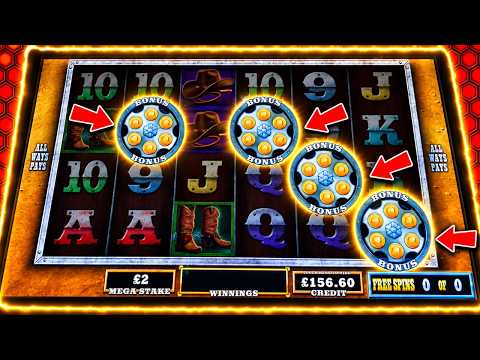
I have dedicated countless hours turning digital reels, and I can say with confidence with certainty that few mechanics energize a session like the Super Spin. This isn’t just a free round or a simple respin. It’s a concentrated burst of enhanced potential that changes the rules of the base game for a handful of exhilarating revolutions. When I unlock one, the screen often goes dark, the music intensifies, and the usual symbols get replaced by a curated set of high-value icons, colossal wilds, or multipliers that stack with reckless abandon. Understanding how these features operate isn’t academic curiosity. It’s the difference between passively wishing for a win and actively knowing when a game’s mathematical profile has shifted decisively in your favor. In this deep exploration, I want to lift the curtain on the Super Spin phenomenon, analyzing its mechanical guts, its strategic implications, and the broader ecosystem of online play that makes these moments possible. This is about transforming that flash of on-screen excitement into genuine, actionable knowledge.
Navigating the Platform Ecosystem for Super Spin Play
My journey with Super Spins is not solely determined by the game’s internal systems. The hosting platform plays an just as vital role in the quality of the experience. When I load these games through a selected hub, I’m seeking a seamless integration that accommodates the high-intensity nature of these mechanics. The first thing I evaluate is the game loading architecture. Super Spin games are often visually dense, with particle details and 3D animations that activate during the mode. A platform that uses lightweight, optimized game clients secures that the Super Spin animation plays out without lagging or lag. This is essential because a freeze during a high-multiplier spin is an intolerable annoyance. I seek platforms that provide a solid “game history” feature, allowing me to review the exact result of a Super Spin if I need to verify the math or just revisit the adrenaline.
The financial infrastructure of the site is equally vital. I want to be sure that I can move funds in and out with minimal difficulty, particularly when I’m going after a specific game’s Super Spin mechanic. I anticipate a cashier part that supports a broad selection of options, from conventional credit cards to modern e-wallets and instant banking options. The deposit flow should be instantaneous so I never lose a chance of possibility, while the withdrawal process needs to be clear regarding processing times. Typically, e-wallet withdrawals are handled within a 24-hour window, while bank transfers might take several business days. I consistently check that the platform employs a strict KYC verification procedure, as this is a trademark of a security-conscious provider. A site that delays verification until the time of withdrawal can create needless complications, so I prefer platforms that promote verification early, ensuring that the proceeds from a profitable Super Spin reach my account without procedural obstacles.
Strategic Bankroll Management for High-variance Features
I approach Super Spin sessions with a fundamentally different bankroll strategy than I use for low-volatility classic slots. The extreme variance requires a defensive posture. Because the Super Spin feature often holds the bulk of the game’s payout potential, the base game can feel like a slow bleed. I compute my session budget based on the estimated frequency of triggering the feature organically. If a game’s data sheet indicates a bonus hits roughly once every 300 spins, I make sure my bankroll can sustain at least 600 to 900 spins to survive the variance without tapping out prematurely. This statistical cushion is crucial. I’ve seen too many players deplete their balance at spin 250, only to have the Super Spin trigger on the next cycle. The math is relentless, and undercapitalization is the fastest way to fail despite making the correct game choice.
As I use the bonus buy option, my calculation moves from survival to unit economics. I treat each purchased Super Spin as an independent trade. I establish a strict limit on the number of consecutive buys I will make, regardless of the outcomes. Hunting a big win through repeated buys is a dangerous spiral because each buy is a fixed cost with a variable, often negative, short-term return. I favor a “take profit” rule. If a purchased Super Spin returns a multiple of the buy cost, I secure that profit and revert to organic spinning or end the session. This discipline enables me to enjoy the thrill of the enhanced reels without letting the convenience of the buy feature erode my discipline. The Super Spin is a tool for entertainment and potential profit, but only when I control the transaction, not when the transaction controls me.

Session Timing and Mental Stamina
I also consider the emotional stamina required to engage with Super Spin-centric slots. The strong peaks of a Super Spin spark a dopamine rush that the following base game spins cannot equal. This produces a psychological “crash” that can lead to frustration and impulsive stake increases. I fight this by planning short, focused sessions. I set a timer, and if the Super Spin has not activated within that window, I walk away. This stops the tilt-induced actions that high-volatility games can provoke. I’ve discovered that the game will still be there tomorrow, and the RNG has no recollection of my previous dry spell. Maintaining this emotional detachment is my most important strategy tool, making sure that when the Super Spin finally activates, I’m viewing it with a clear, analytical mind rather than the urgency of a player trying to recover losses.
Triggering the Enhanced Reels: Paths to the Feature
Accessing a Super Spin is hardly ever a passive affair. It usually necessitates a specific catalyst that fits the game’s narrative. The most widespread method I encounter is the scatter collection mechanic. Typically, landing three designated scatter symbols anywhere on the grid opens the bonus portal. However, developers have advanced beyond this classic trigger. In many modern titles, I notice a “metered” approach where high-value symbols are collected during base game play. Once the meter is filled, the Super Spin triggers, often with an elevated multiplier added as a reward for patience. This transforms every base game spin into a progression step, which I find maintains the engagement level high even during non-paying cycles.
Another intriguing trigger is the “random activation” or “mystery” trigger https://rump-friends.com/. Here, the game can abruptly interrupt a losing spin with a dramatic animation, revealing that the Super Spin mode has been granted by the game’s algorithm. This is not truly random in a cosmic sense, but rather a function of a secondary RNG check that runs parallel to every spin. I also observe the “ante bet” or “bonus buy” pathways, which have become a dominant force in the industry. By wagering a premium multiplier of my base stake, I can bypass the waiting game and buy direct entry into the Super Spin round. This is a sharply transactional approach to the mechanic. It appeals to my desire for immediacy, but it requires a keen understanding of the feature’s average payout potential. Paying 100x the stake for a Super Spin that statistically returns 80x is a losing proposition unless the jackpot potential justifies the deficit. I always evaluate the buy cost against the organic trigger frequency before acting.
Licensing, Impartiality, and the Soundness of Enhanced Rounds
When I’m staking real money on a Super Spin, I need absolute confidence that the enhanced reels are functioning under a approved random number generator. The visual spectacle means nothing if the backend is not strictly audited. I seek platforms that operate under the oversight of respected regulatory bodies. These authorities mandate that the game’s math model, including the alternative reel sets used for Super Spins, is submitted for testing by independent laboratories. These labs verify that the stated hit frequency for the Super Spin matches the actual code. I find comfort in knowing that the dramatic shift in symbol weighting I notice during a Super Spin is not a psychological trick but a documented, audited change in the game’s state. The return to player percentage is usually calculated over millions of spins, encompassing both the base game and the Super Spin contributions, but I appreciate when a game’s help file details the RTP contribution of the feature specifically.
Beyond the RNG, the concept of “maximum win limits” is a crucial piece of regulatory and operational policy that directly impacts Super Spin play. Many platforms apply a maximum cashout cap on a single spin or bonus round. If I’m engaging a Super Spin with a 50,000x potential, but the platform has a 25,000x cap, I’m effectively experiencing a truncated version of the game’s math model. I take care to read the terms and conditions regarding maximum win limits before I buy a bonus or devote to a session. This is not just about the ceiling. It’s about the expected value. If the cap truncates the extreme tail of the distribution, the effective RTP of the Super Spin feature is slightly reduced. Transparency here is a mark of a fair operator. I also value platforms that promote responsible gaming tools that align with the high-volatility nature of Super Spins, enabling me to set loss limits that acknowledge the potentially long dry spells between these blockbuster features.
The Inner Workings of a Super Spin
When I dissect a slot’s code theoretically, a Super Spin is a specialized game state where the reel strips get briefly swapped out. In a standard spin, the random number generator picks a stop position from a vast virtual reel containing a mix of low-value card royals, medium-tier symbols, and the elusive high-paying icons. The Super Spin steps in by loading a secondary set of reel strips that are heavily altered. I’ve seen that developers typically strip out the low-paying symbols fully, leaving only premium character symbols, wilds, and scatters. This instantly inflates the hit frequency for major combinations. The weighting is often tweaked so that wild symbols appear far more frequently than they do in the base game. This isn’t a slight tweak. It’s a fundamental re-engineering of the game’s volatility profile for a restricted duration, creating a temporary high-roller environment within a standard stake framework.
The technical execution varies, but the core principle of symbol removal remains constant. Some studios execute this through a “stacked” mechanism, where only super-sized symbols land, assuring that if a reel stops, it is completely filled with a matching icon. I find this especially thrilling because it avoids the need for complex payline alignments. Another common approach involves a persistent sticky wild feature during the Super Spin, where any wild that lands sticks in place while the remaining reels respin. This creates a compounding effect. The first spin might yield a moderate line hit, but by the third and final Super Spin, the grid is so filled with wilds that a full screen feels inevitable. Understanding this mechanical transition helps me control my expectations. I know that a Super Spin is not a certain jackpot, but it is a mathematically unique event where the house edge is momentarily compressed, offering a volatility spike that can shape an entire session.
Enhanced Spins Versus Standard Free Spins: A Critical Distinction
I frequently hear players use these terms as synonyms, but I maintain that a Super Spin fills a different category above a ordinary free spin. A standard free spin bonus usually grants a set number of spins at the triggering stake with a small improvement, such as a low multiplier or a single expanding icon. The reel strips often are unchanged to the original game. A Super Spin, by comparison, is defined by its exclusivity. The count of spins is usually very low, occasionally only one spin, but that one rotation holds the significance of a hundred standard turns. I think of it as the contrast between a continuous artillery bombardment and a precision missile strike. The regular free spin round counts on mass and erosion to generate value, whereas the Super Spin relies on a single, high-impact moment of condensed probability.
The cognitive rhythm also differs dramatically. During a lengthy free spin feature, I adapt to a rhythm, watching the credit tally incrementally rise or fall. A Super Spin, however, creates a sharp peak of adrenaline. The interface often changes to a cinematic camera angle, and the spin button flashes with a alternate colour. I’ve noticed that the auditory feedback is engineered to signal that the normal rules are halted. This distinction is important for bankroll management. If I’m playing a game known for a Super Spin feature, I know that the base game will likely be less stable and potentially less rewarding as it funnels value into that single explosive moment. I adjust my strategy accordingly, often decreasing my base stake slightly to prolong my session time, ensuring I weather the dry spells long enough to hit the high-impact Super Spin event.
Volatility Engineering in High-Impact Rounds
When I examine the math models underlying these features, I’m looking at a deliberate volatility spike. Game designers employ Super Spins to create a “tale of two games” within a single executable. The base game can run at a medium volatility, delivering frequent but small wins to maintain the balance ticking over. The Super Spin, however, is the designated carrier of the extreme upside. I’ve encountered games where the maximum win potential is mathematically impossible to achieve outside of the Super Spin mode. This is because the reel strips required to land a full screen of the top-paying symbol simply do not exist in the base game’s configuration. They are loaded exclusively for the enhanced state. This engineering ensures that the game’s marketing can boast a 50,000x max win cap, while the actual base game never comes close to threatening that liability.
The Function of Multiplier Accumulation
Within the Super Spin framework, the multiplier mechanism often operates distinctly than in regular play. I regularly encounter escalating multipliers that increase with each cascading win during the bonus. Since the Super Spin is designed to generate multiple consecutive wins due to the premium symbol set, a beginning 1x multiplier can rapidly escalate to 10x or 20x before the final payout is calculated. This is a geometric progression that regular free spins rarely match. I also observe “win multipliers” that are implemented across the board to the total Super Spin payout, not just the line wins. This implies that a small combination of symbols, when boosted by a 50x overall boost, transforms into a massive return. I carefully monitor to whether the multiplier is additive or exponential, as this variation greatly affects the round’s maximum.
The Future Trajectory of Super Spin Mechanics
Thinking ahead, I view the Super Spin concept developing into something even more engaging and personalized. The current generation of games processes the Super Spin as a unchanging, pre-coded event. I expect a shift towards responsive Super Spins that modify their parameters based on my play history. Imagine a game that records my symbol preferences and dynamically weights the Super Spin reels to prioritize those icons, producing a bespoke high-volatility event. This level of personalization is technically feasible with modern server-side game logic. I also predict the integration of gamification layers, where I can “enhance” my Super Spin potential through achievements or loyalty tier progression. Instead of a standard 100x bonus buy, my VIP level might award me a 100x buy with a certain starting multiplier, introducing a meta-game of progression to the slot experience.
The convergence of streaming culture and Super Spin mechanics is another frontier I’m watching closely. We’re already observing games designed with “clip-worthy” moments in mind, but future titles might allow communal Super Spins, where multiple players chip in to a shared meter that triggers a massive, synchronized enhanced spin for everyone in the lobby. This social volatility would create a shared viewing experience unlike anything currently available. On the technical side, the integration of provably fair algorithms, borrowed from the crypto gaming space, could enable me to independently verify that the Super Spin reel strips were swapped exactly as advertised. This cryptographic transparency would eliminate any lingering doubts about the integrity of the enhanced state. The Super Spin is not a static feature. It’s a living mechanic that will continue to push the boundaries of what a slot machine can deliver in terms of excitement and trust.
My thorough exploration into the Super Spin shows it to be more than just a showy marketing term. It is a complex mathematical instrument engineered to concentrate volatility and provide the kind of life-changing payout potential that characterizes modern online play. Understanding the reel strip manipulation, the trigger conditions, and the platform infrastructure that backs these features has transformed how I approach the entire genre. I no longer merely see spinning reels. I recognize a calculated interplay of probability, psychology, and technology. The next time you load a game and catch that recognizable audio cue signaling the Super Spin, I wish you sense not just the thrill of excitement, but the certainty of knowing precisely what is happening beneath the surface. That knowledge is your true edge, transforming a game of chance into a intentional, informed pursuit of those thrilling, screen-shaking moments that we all pursue.
Mobile Enhancement: Super Spin Features in the Hand of Your Hand
I perform a large portion of my play on mobile devices, and the adaptation of Super Spin mechanics to a smaller screen is a key technical challenge. A poorly optimized mobile port can ruin the feature. The touch interface must be responsive, but more importantly, the user interface must not obscure the action. During a Super Spin, the screen real estate is valuable. I’ve encountered mobile versions where the multiplier counter or the special symbol tally overlays the reels, blocking my view of a crucial landing. The best designs I see use a dynamic scaling system that moves UI elements to the bezels or briefly fades them out during the spin animation. The “portrait mode” optimization is typical, but I’m progressively impressed by landscape mode layouts that use the extra width to display enhanced stats, such as the current RTP contribution of the ongoing Super Spin session.
Battery consumption and data usage are actual concerns that cannot be overlooked. Super Spin animations are power-hungry. I’ve noticed phones heat up during an prolonged bonus buy session because the GPU is rendering complex shaders for the enhanced reels. Progressive platforms offer a “battery saver” mode that simplifies the particle effects without changing the underlying math. This is a feature I consistently seek out, as it enables me to participate with the high-volatility mechanics without draining my device. The consistency of the mobile connection is crucial. A interrupted connection during a Super Spin must be dealt with gracefully by the server. I always check a platform’s recovery protocol by activating airplane mode during a demo spin. The game should stop and restart at the precise point of interruption, maintaining the RNG state. This server-side state preservation is a essential technical requirement for any platform I depend on with real money Super Spin play.